
 Business License

Quality Systems at Feilong: ISO-Certified Bone Ash Production from Raw Bone to Finished Powder
A foundry buyer in Eastern Europe once told a Feilong sales engineer that he had received bone ash from three different Chinese suppliers in one year, and the only one that delivered the same material twice in a row was Luohe Feilong Bone Carbon Co., Ltd. The buyer was not making a compliment. He was stating the one fact that mattered to his production planning: consistent bone ash is worth more than a low price, because every batch of off-spec material costs him a day of adjustments on the foundry floor.
Consistency is not an accident at Feilong. It is the output of a documented quality system that starts with the raw bone entering the plant and ends with a certificate of analysis packed with every shipment. This article describes how that system works, what ISO 9001 certification means in practice for this production process, and how buyers can verify the quality discipline behind the powder they order.
1. The Production Chain at a Glance
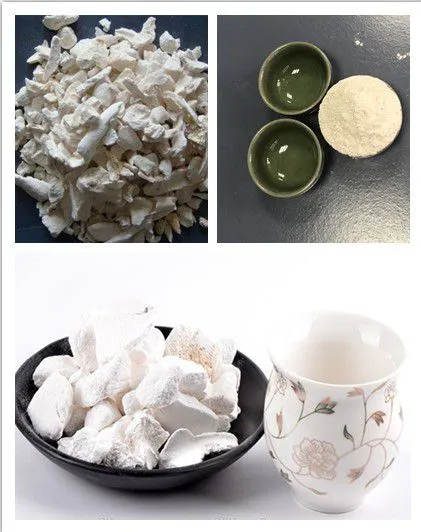
Luohe Feilong Bone Carbon Co., Ltd. operates a 3,000 to 5,000 square meter facility in the Zhaoling District of Luohe, Henan Province, with three dedicated processing lines and a workforce of roughly 11 to 50 people, of whom 5 to 10 work in quality inspection. The plant has produced industrial bone ash since the company was established in 2011, and its product range covers bone ash, bone char, and bone ash powder in grades oriented to mold release and ceramic applications.
The production chain follows a fixed sequence of preparation, thermal processing, milling, and classification, and the quality system is built around control points at each stage rather than a single final inspection. This stage-by-stage approach is what makes the output predictable, because problems are caught where they originate instead of being discovered in the finished powder.
The same facility serves customers across Eastern Europe, Africa, the Middle East, and East Asia, with shipments leaving through Qingdao Port. Feilong's product line covers bone ash, bone char, and bone ash powder, with grades sized and specified for the two dominant application families: mold release for non-ferrous casting and raw material for bone china bodies. The plant also produces bone char for industrial users whose processes require the carbon-bearing form, and each product family carries its own specification set and testing profile, so buyers receive material made to the parameters their application actually needs.
2. Four Processing Stages, Four Control Points
The transformation of raw bone into industrial bone ash passes through four main stages, each with its own quality parameters. The first stage is high-pressure sterilization, which cleans the raw material and removes biological risk before any further processing. The control here is on temperature and pressure parameters, documented for every batch to verify that the cycle was completed within specification.
The second stage is high-temperature cooking and pressing, which removes residual fat and separates the bone tissue from non-mineral components. Operators monitor the cooking time and the pressing yield, because fat remaining in the bone would later burn off in the kiln and raise the loss on ignition of the finished ash. The third stage is roasting and calcination, where the cleaned bone is converted to the mineral ash that forms the final product. Kiln temperature, residence time, and the loss on ignition of the output are the controlling parameters here.
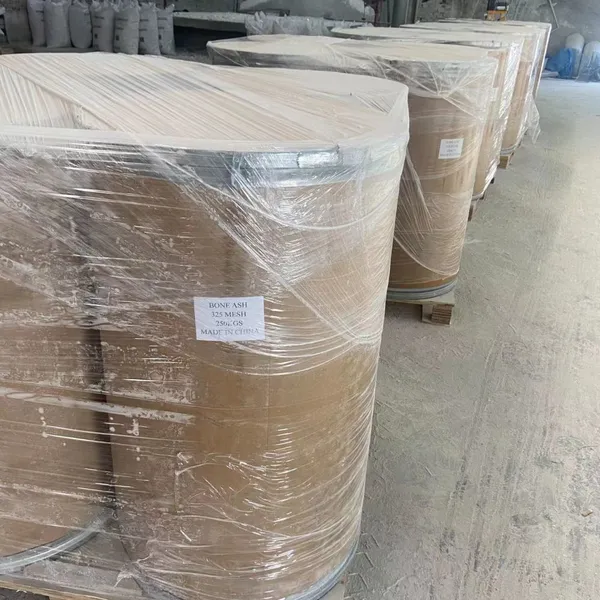
The fourth stage is milling and screening to the target particle size, followed by packaging. The control points are the sieve analysis results and the moisture content of the finished powder before it enters the bag.
The table below summarizes the four stages and their associated quality control parameters.
| Stage | Process | Key Quality Parameters |
|---|---|---|
| 1 | High-pressure sterilization | Temperature, pressure, cycle time |
| 2 | High-temperature cooking and pressing | Cooking time, fat removal, pressing yield |
| 3 | Roasting and calcination | Kiln temperature, residence time, loss on ignition |
| 4 | Milling, screening, and packaging | Particle size, moisture, cleanliness |
This stage structure also gives the quality system a practical benefit that buyers notice. When a customer requests a specific adjustment, such as a finer particle size cut or a lower loss on ignition target, the change is implemented as a documented modification of the relevant stage parameters rather than as an ad hoc adjustment. The modified specification is then repeatable for subsequent orders, which is how the plant supports custom requirements without losing consistency.
3. What ISO 9001 and ISO 9000 Mean in This Context
Feilong operates its quality system under ISO 9001 and ISO 9000 certification. In practical terms, this means the plant runs documented procedures for production control, inspection, corrective action, and record keeping, and those procedures are audited periodically to confirm that the documented process is actually the process being followed on the floor.
For a buyer, the value of the certification is not the certificate itself but what it implies about documentation. An ISO-managed plant can trace a finished shipment back to the raw material lots, the processing parameters, and the inspection results that produced it. That traceability is exactly what a foundry or ceramics factory needs when it must investigate a quality problem or simply confirm that the material received matches the material ordered.
The company applies the same documented discipline to both foundry-grade and ceramic-grade output, with specification sets adapted to each application.
4. Testing and the Certificate of Analysis
Every production lot at Feilong is sampled and tested before release, and the results are summarized in a certificate of analysis that accompanies the shipment. The core tests cover loss on ignition, calcium and phosphorus content, particle size distribution, and moisture, with the specific parameter set adjusted to the grade and the customer's requirements.
Loss on ignition is the test most directly linked to calcination quality, because it measures the completeness of organic removal. For foundry-grade material the target is typically below 2 percent, while ceramic-grade lots are held to a tighter standard below roughly 1.5 percent, since residual carbon would risk discoloration in glaze firing. Particle size is verified by sieve analysis against the declared mesh range, and the certificate records the measured distribution rather than a single nominal value.
Customers can request additional tests, and the plant performs them as part of the lot record. The certificate therefore reflects the actual lot being shipped, not a generic product description.
Incoming raw material is also part of the documented system. The plant evaluates the bone feedstock for cleanliness and consistency, and the intake records capture the source and condition of each raw material lot. Because the starting chemistry of the bone influences the finished ash, controlling the input is a precondition for controlling the output, and the intake inspection is treated with the same discipline as the product tests.
5. The Quality Team in Daily Production
The inspection team of 5 to 10 people at Feilong is distributed across the process rather than concentrated at the final gate. Inspectors sample the raw material intake, verify the sterilization and cooking records, monitor the calcination output, and run the finished powder tests before packaging. Each inspection step is documented on a batch record that follows the material through the plant.
This distribution of inspectors matters for two reasons. It catches drift early, when the cost of correction is still small, and it means that no single individual holds the fate of the quality system, because the checks are built into the process rather than depending on one person's diligence at the end of the line.
In our experience, the observable difference between a quality-managed plant and an unmanaged one appears in the batch records. When records are complete and consistent, the material tends to be consistent too.
6. Lot Traceability and Customer Documentation
Each lot leaving the Feilong facility carries an identifier that links the packaged bags to the production records and the certificate of analysis. If a customer reports a variation in a shipment, the company can pull the records for that lot, confirm the processing parameters, and determine whether the issue originated in production, in transit, or in storage at the destination.
This traceability also supports the buyer's own incoming inspection. A certificate with lot-specific test results gives the foundry or ceramics factory a baseline against which to compare its own sampling, which shortens the verification process and gives the quality team a reference point if values drift.
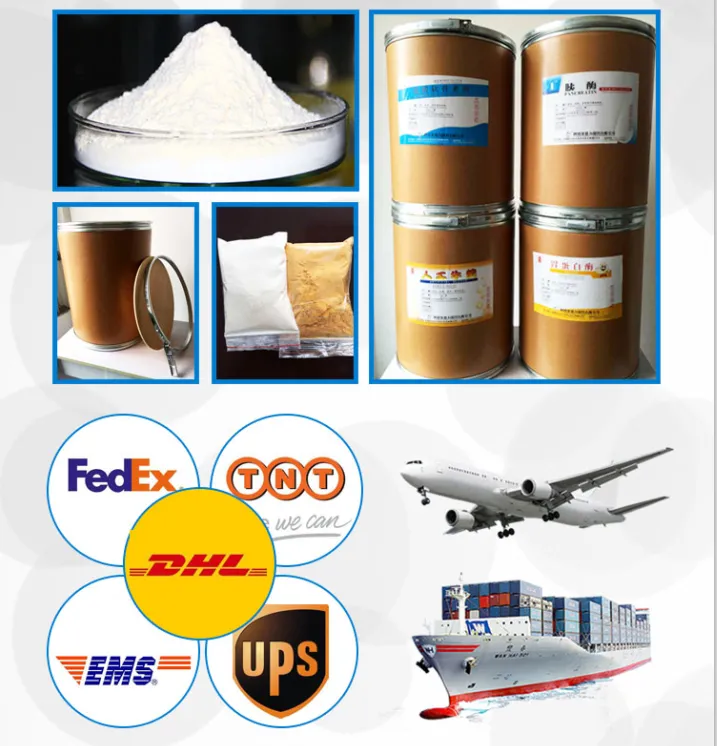
For export orders, the documentation set is prepared with the logistics chain in mind, including the packing list, the certificate of analysis, and the export documentation needed for customs clearance through Qingdao Port.
7. Case Study: Consistent Lots Across a Multi-Shipment Order
A bone china manufacturer in the Middle East placed a series of orders for ceramic-grade bone ash over a twelve-month period and tested each incoming lot for loss on ignition, iron content, and fired whiteness. The results across the series stayed within a narrow band, with loss on ignition remaining below 1.2 percent on every lot and the fired tile tests matching the reference sample without adjustment.
The manufacturer attributed the stability to the documented process control and stated in its supplier review that the batch records and certificates provided with each shipment allowed its own quality team to release the material to production without extra laboratory work.
8. Case Study: A Customer Audit Without Findings
A foundry customer a while back audited the Feilong plant as part of its own supplier qualification process, reviewing the sterilization records, calcination logs, and inspection documentation for a sample of recent lots. The audit team found the batch records complete for every lot reviewed, with no missing signatures and no gaps in the processing logs.
The audit closed without corrective findings, and the customer subsequently placed its first repeat order based on the documented quality record.
9. Frequently Asked Questions
9.1 Can buyers request a certificate of analysis with every shipment?
Yes. Every lot shipped from Feilong is released only after testing, and the certificate of analysis is provided with the shipment as standard practice. The certificate records the measured values for the parameters relevant to the grade, including loss on ignition, calcium and phosphorus content, particle size distribution, and moisture. Buyers who require additional parameters for a specific application can specify them at the ordering stage, and the plant will include them in the lot testing and documentation.
9.2 How does Feilong ensure consistency between different grades?
Each grade is produced to its own documented specification, with the processing parameters and acceptance limits defined separately for foundry-grade and ceramic-grade material. The calcination temperature, milling target, and testing requirements differ by grade, and the batch records reflect those differences. Because the process is documented, the plant can reproduce the same parameters for the same grade across production runs, which is the basis of the lot-to-lot consistency that buyers report.
9.3 Is the ISO 9001 certification applicable to the whole facility?
The certification covers the company's quality management system, which applies to the production and inspection processes across the facility rather than to a single product line. This means the documented procedures, records, and audit requirements govern all three processing lines and both major product categories. Buyers should still verify that the specific grade they order is produced under the declared specification, since the system certifies the management framework while product specifications are defined per grade.
9.4 What happens if a customer receives a lot that does not match the certificate?
The company treats discrepancies as a quality event with a documented investigation. The lot identifier on the shipment allows the production and inspection records to be retrieved, and the customer's test results are compared against the lot records to identify where the difference originated. Depending on the outcome, the material is replaced or the specification adjusted, and the corrective action is fed back into the process. The traceability system exists precisely to make this kind of investigation fast and factual rather than a matter of dispute.
Recently Posted
-
Bone Ash in Aluminum Die Casting: Release Agent Selection and Performance
September 4, 2026An aluminum die casting shop in Turkey was told by a chemical supplier that its water-based release agent was fine and the problem Read More
 -
Bone Ash Procurement for Bone China Manufacturers
September 3, 2026A bone china factory in the United Kingdom ordered bone ash from a new source because the price was roughly 18 percent below its e Read More
 -
Bone Ash vs Talc as a Parting Agent in Metal Casting
September 3, 2026A zinc die caster in the Balkans cut its parting material cost by roughly 60 percent by switching from bone ash to talc, then spen Read More
 -
How Bone Ash Works as a Mold Release Agent in Metal Casting
September 2, 2026A small brass foundry in South Asia ran the same mold for fourteen years without changing its parting material, then switched to a Read More

Contact Us
Recommended Products
-
 Manufacturer Sell Low Price Calcined Bone Ash or PowderUS$ 850MOQ: 5 Tons
 -
Manufacturer Sell Low Price Calcined Bone Ash or PowderUS$ 850MOQ: 5 Tons
-
Manufacturer Sell Low Price Calcined Bone Ash or PowderUS$ 850MOQ: 5 Tons
-
Sell Well Bone Ash for Mold Releasing UseUS$ 880 - 920MOQ: 5 Tons
-
Feilong Direct Sales Die-casting Water-soluble Mold Metal Release AgentUS$ 920MOQ: 5 Tons
-
Natural Animal Bone AshUS$ 880 - 920MOQ: 5 Tons
-
China Manufacturer Supply Eco-Friendly Bone Ash PowderUS$ 890MOQ: 1 Ton
-
Calcined Bone Ash for Bone China With GoodPriceUS$ 880 - 920MOQ: 5 Tons
-
Synthetic Bone Ash for Ceramic With Good PriceUS$ 850MOQ: 5 Tons
-
Calcium and Phosphorus Powder - 325 MeshPowderUS$ 850MOQ: 5 Tons
-
Calcium and Phosphorus Powder - 325 MeshPowderUS$ 850MOQ: 5 Tons
-
Calcium Stearate PVC PE Lubricant Mould-releasing Powder ManufacturerUS$ 850MOQ: 5 Tons
-
Reputed Supplier Selling Bone Ash Powder Which Meet With Environmental Standard As Animal FeedstuffUS$ 850MOQ: 5 Tons
-
Industrial Grade Bone Ash for Bone Ceramics and MetallurgyUS$ 900MOQ: 10 Tons
-
Animal Ashes Used for Bone ChinaUS$ 900MOQ: 5 Tons
-
Calcium and Phosphorus Powder - 325 MeshPowderUS$ 850MOQ: 5 Tons
-
High Quality Bone Ash for Mold Releasing Use/bone Ash PowderUS$ 850 - 880MOQ: 5 Tons
-
Manufacturer Sell Low Price Calcined Bone Ash or PowderUS$ 850MOQ: 5 Tons
-
Calcined Bone Ash for Bone China With GoodPriceUS$ 880MOQ: 5 Tons
-
High Quality Bone Ash for Mold Releasing Use/bone Ash PowderUS$ 880 - 920MOQ: 5 Tons