
 Business License

Cupellation Method: A Complete Guide to Fire Assay and Precious Metal Analysis
A single cupel made from the wrong bone ash can destroy an entire fire assay and cost a refinery thousands of dollars in rework and lost confidence. Yet the cupellation method remains the final, decisive step in determining the true gold and silver content of ores, concentrates, and recycled materials.
If you manage an assay laboratory, precious metals refinery, or mining operation, you already know that cupellation accuracy depends on far more than furnace temperature and lead quantity. The cupel itself, the flux, the temperature curve, and the operator's technique all interact to produce either a clean precious metal bead or a compromised result.
In this guide, we explain the cupellation method from raw sample to final bead. You will learn how cupellation works, what equipment and materials you need, where the process is applied, and which factors most affect accuracy. We also cover what to look for when sourcing bone ash cupels, because cupel quality is one variable you can control before the furnace ever turns on.
Need cupels you can trust for your next assay campaign? Request a bone ash sample with COA and test it against your current supply.
What Is the Cupellation Method?
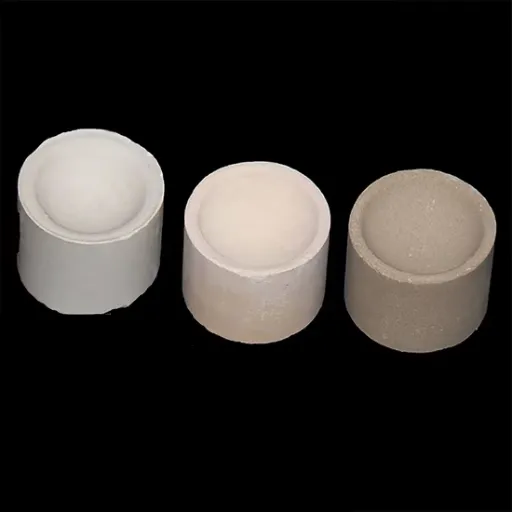
The cupellation method is a metallurgical process used to separate precious metals, primarily gold and silver, from base metals such as lead, copper, and zinc. The sample is melted with lead in a porous cup made from bone ash, called a cupel. At high temperature, the lead oxidizes and is absorbed into the cupel, while the precious metals remain as a small bead on the surface.
This method is the final step in fire assay, a technique that has been used for more than 2,000 years to quantify precious metal content. Modern assay laboratories still rely on cupellation because it offers high accuracy, relatively simple equipment, and reliable results across a wide range of sample types.
The cupellation method is used in several industries:
Mining and mineral exploration
Precious metal refining
Jewelry manufacturing and bullion trading
Recycling of electronic waste and catalysts
Environmental and geological testing laboratories
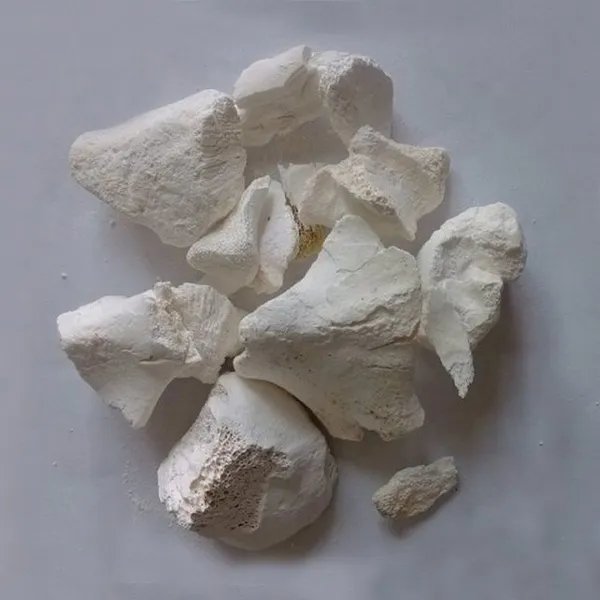
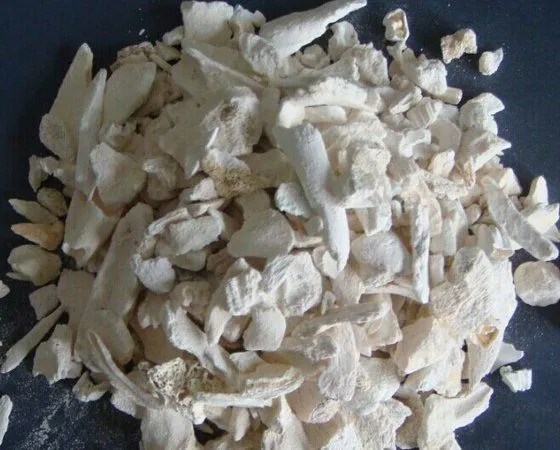
Because cupellation relies on a bone ash cupel, the quality of that bone ash directly affects the outcome. A properly manufactured cupel absorbs lead oxide at a controlled rate without cracking, crumbling, or contaminating the bead. You can read more about the raw material in our overview of what is bone ash.
How Cupellation Works: The Step-by-Step Process
The cupellation process follows a clear sequence. Each stage must be controlled precisely, because errors in one step compound in the next.
Step 1: Sample Preparation and Weighing
The assay begins with a representative sample. For ores and concentrates, the material is crushed, pulverized, and homogenized before a precise weight, often 30 grams, is taken. The sample weight is recorded because the final bead weight will be compared against it to calculate metal grade.
Step 2: Fusion With Lead and Flux
The weighed sample is mixed with lead, fluxes, and sometimes silver if the sample contains only gold. Common fluxes include litharge, soda ash, borax, silica, and flour. The mixture is heated in a crucible at temperatures around 900°C to 1100°C. During fusion, base metals and gangue form a slag, while precious metals dissolve into the lead.
Step 3: Pouring the Lead Button
After fusion, the crucible is removed and the molten contents are poured into a conical mold. The lead button, which now contains the dissolved gold and silver, separates from the slag as it cools. The slag is discarded, and the lead button is cleaned and weighed.
Step 4: Placing the Button in the Cupel
The lead button is placed into a preheated bone ash cupel. The cupel is seated in a cupellation furnace at approximately 900°C. The furnace atmosphere, temperature uniformity, and venting all matter at this stage.
Step 5: Oxidation and Absorption
As temperature rises, the lead surface oxidizes to litharge. The porous bone ash cupel absorbs the molten litharge, drawing it away from the button. The lead continues to oxidize and absorb until only the precious metals remain as a small bead on the cupel surface.
Step 6: Recovery and Weighing
Once cupellation is complete, the furnace is allowed to cool slightly and the bead is removed. The bead is weighed, and its composition can be further analyzed if gold and silver must be reported separately. The result is typically expressed as grams per metric ton or troy ounces per ton.
Equipment and Materials Used in Cupellation
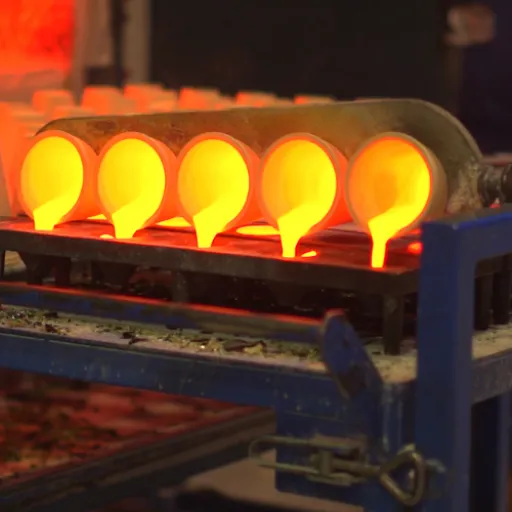
Reliable cupellation requires specific equipment. Cutting corners on any component introduces error.
Cupels and Bone Ash
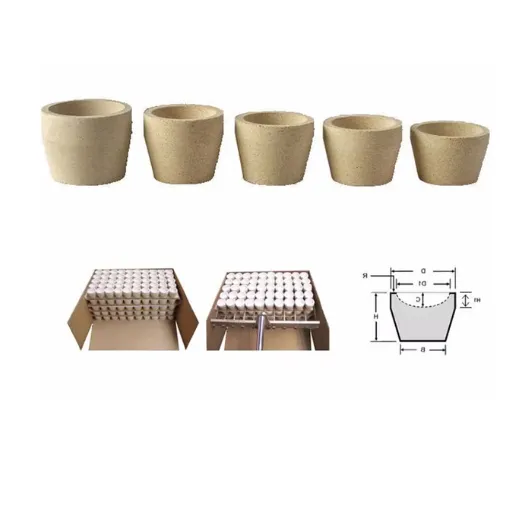
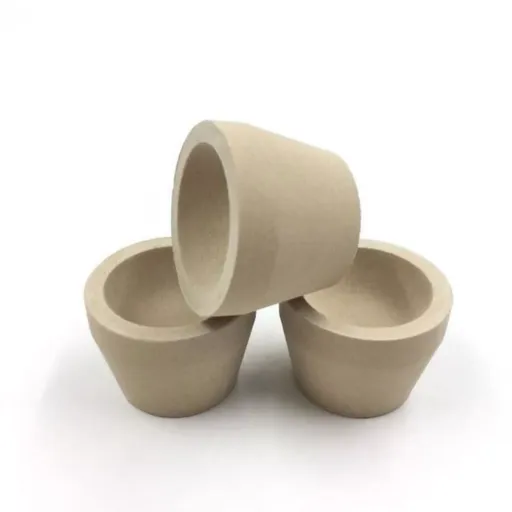
Cupels are small, cylindrical containers made from compressed bone ash. They must be uniform in composition, free from contaminants, and engineered to the right porosity. Too dense, and they will not absorb litharge efficiently. Too porous, and they may crack or absorb the bead.
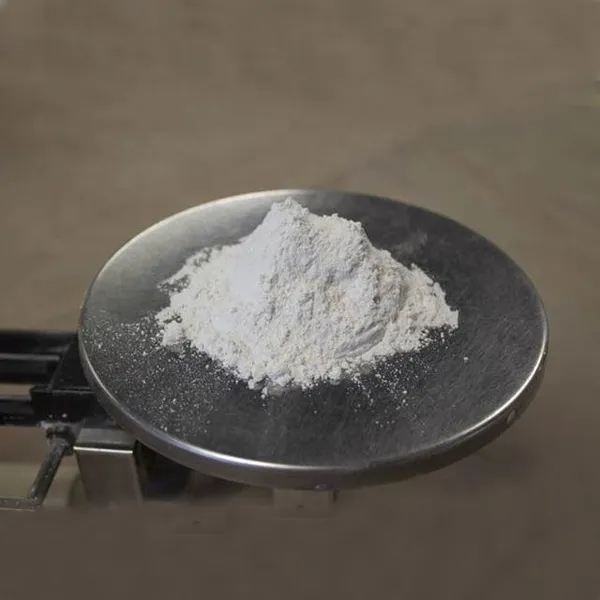
Feilong produces bone ash for metallurgical applications, including cupel manufacturing. Our material is calcined at 1300°C to achieve consistent calcium and phosphorus content, low iron, and controlled particle size.
Cupellation Furnace
Cupellation furnaces must maintain a uniform temperature across all cupel positions and provide controlled airflow. Muffle furnaces are common in laboratory settings, while larger operations may use multi-position cupellation furnaces capable of processing dozens of samples per batch.
Crucibles and Molds
Fusion crucibles are typically made from clay or refractory materials capable of withstanding high temperatures and corrosive slags. Conical molds are used to form the lead button after fusion.
Fluxes and Reagents
Standard fluxes include litharge, sodium carbonate, borax, silica, and flour. The exact recipe depends on sample composition. An experienced assayer selects flux proportions to produce a fluid slag and complete collection of precious metals.
Applications of the Cupellation Method
Cupellation is not limited to one industry. Any operation that needs to verify precious metal content can use this method.
Gold Assay
Gold ores, concentrates, and bullion are routinely assayed by fire assay with cupellation as the final step. The method is recognized by standards including ASTM E1335 for gold in bullion. Accuracy is critical because small differences in grade translate into large differences in value.
Silver Assay
Silver-bearing materials are also analyzed by cupellation. In many gold assays, silver is added as a collector if the sample contains only gold, because gold and silver alloy together and behave predictably during cupellation.
Ore and Concentrate Analysis
Mining laboratories use cupellation to determine the precious metal content of exploration samples, drill core, and production concentrates. These results guide mine planning, process optimization, and commercial settlements.
Recycling and Refining
Precious metals recovered from electronics, catalytic converters, and industrial waste are often verified by cupellation before final sale or refining. In this setting, sample matrices can be complex, making cupel quality and flux selection especially important.
Factors That Affect Cupellation Accuracy
Even experienced laboratories encounter assay errors. The most common sources of error are controllable.
Cupel Quality
The cupel must absorb lead oxide at a steady rate while retaining its structural integrity. Poor-quality bone ash, inconsistent compression, or contamination can cause premature cracking, erratic absorption, or bead loss. Always source cupels made from consistent, high-purity bone ash.
Temperature Control
Cupellation temperature typically ranges from 850°C to 1000°C, depending on the sample. Too low, and oxidation proceeds too slowly. Too high, and the bead may volatilize or penetrate the cupel. Temperature uniformity across the furnace is equally important.
Lead Quantity
The lead button must be large enough to collect all precious metals but not so large that the cupel cannot absorb the resulting litharge. Standard practice uses a lead-to-sample ratio based on expected precious metal content and cupel capacity.
Flux Composition
The flux must react completely with the sample gangue to form a clean slag during fusion. An incorrect flux recipe can leave base metals in the lead button, which may then interfere with cupellation and produce inaccurate results.
Operator Technique
Cupellation is partly an art. Timing, observation of the bead's appearance, and judgment about when to stop heating all affect the final result. Standard operating procedures and regular training reduce operator-related variation.
Selecting Bone Ash Cupels for Reliable Assay Results
Cupel manufacturers have choices when sourcing bone ash. Those choices matter to every laboratory that uses the finished cupel.
Chemical Composition
High-quality bone ash for cupels should have:
Calcium (Ca): ≥35.0%
Phosphorus (P): ≥16.0%
Iron (Fe): ≤0.05%
Burning loss: ≤1.0%
pH: 9.0–11.5
These values support consistent porosity and absorption behavior. Elevated iron or other impurities can discolor the bead and alter cupellation chemistry.
Particle Size and Porosity
Bone ash particle size affects how the cupel is formed and how it performs under heat. Manufacturers of assay cupels typically require specific mesh sizes and controlled moisture content to achieve repeatable compression and porosity.
Batch Consistency
Assay laboratories run validation tests on new cupel lots. If a cupel supplier cannot document consistent composition from batch to batch, the laboratory faces repeated requalification work and potential assay drift.
Documentation
Request a Certificate of Analysis with every shipment. The COA should show chemical composition, particle size, and physical properties. This documentation supports internal quality systems and customer audits.
At Luohe Feilong Bone Carbon Co., Ltd., we supply bone ash to cupel manufacturers and assay operations worldwide. Our quality control process includes batch testing, COA issuance, and export documentation. Whether you need standard cupel-grade bone ash or a custom specification, we can provide samples for qualification testing.
Want to qualify Feilong bone ash for your cupels? Request a sample with full COA and compare it against your current material.
Mini-Scenario: When Cupel Quality Saved an Assay Campaign
Last year, a mid-sized refinery in Southeast Asia switched to a lower-cost cupel supplier to reduce consumable costs. Within two batches, their fire assay results began drifting. Beads were smaller than expected, repeat assays disagreed, and one batch of cupels cracked during heating, ruining twelve samples.
The laboratory manager traced the problem to inconsistent bone ash in the new cupels. Calcium content varied by more than 3 percentage points between lots, and iron levels were three times higher than the previous supplier's material. After reverting to a verified cupel supplier and adding incoming lot testing, the drift disappeared. The experience cost the lab nearly six weeks of extra validation work but reinforced a lesson: cupel savings mean nothing if assay integrity is compromised.
Cupellation Method vs. Instrumental Analysis
Modern laboratories have alternatives to fire assay, including atomic absorption spectroscopy, inductively coupled plasma mass spectrometry, and X-ray fluorescence. These methods are faster for many applications and require less hazardous reagents.
However, fire assay with cupellation remains the reference method for gold and silver because it physically separates precious metals from matrix interferences. When disputes arise over grade, when samples are complex, or when the highest accuracy is required, cupellation is often the final arbiter.
The choice between cupellation and instrumental analysis depends on required accuracy, sample volume, regulatory requirements, and available expertise. Many high-volume laboratories use both, with fire assay as the trusted check method.
Best Practices for Cupellation in Your Laboratory
Implementing disciplined procedures improves assay repeatability and reduces costly rework.
Qualify every new cupel lot before using it for production assays. Run control samples with known precious metal content and compare results against historical data.
Control furnace temperature profiles. Use calibrated thermocouples and document temperature uniformity across the muffle.
Standardize flux recipes by sample type. Maintain a library of proven recipes and update them when ore mineralogy changes.
Train operators on visual endpoints. The appearance of the bead and the amount of residual lead indicate when cupellation is complete.
Maintain chain of custody for samples, buttons, and beads. Accurate records support commercial settlements and quality audits.
Source bone ash from a manufacturer with production control. Traceability from raw bone through calcination, grinding, and testing reduces the risk of supply-related variation.
Conclusion
The cupellation method has endured for centuries because it delivers accurate, defensible results for precious metal content. While modern instrumentation offers speed and convenience, fire assay with cupellation remains the trusted final step for gold and silver analysis.
For laboratories and refineries, the quality of the bone ash cupel is one of the most important controllable variables in the process. Consistent chemical composition, proper particle size, and reliable batch documentation protect assay integrity and reduce rework.
At Feilong, we have manufactured bone ash and bone-derived products for more than 20 years. Our 1300°C calcination process, batch testing, and export experience support cupel manufacturers and assay operations that demand consistent raw materials.
Ready to improve your cupellation reliability? Request a bone ash sample with COA, contact our technical team, or explore our metallurgical solutions to discuss your cupel-grade bone ash requirements.
Recently Posted
-
Luohe Feilong Bone Carbon: Industrial Bone Ash Manufacturer Since 2011
August 17, 2026When a copper foundry in Turkey needs bone ash that releases cleanly from a sand mold at 1,100 degrees Celsius, or a bone china fa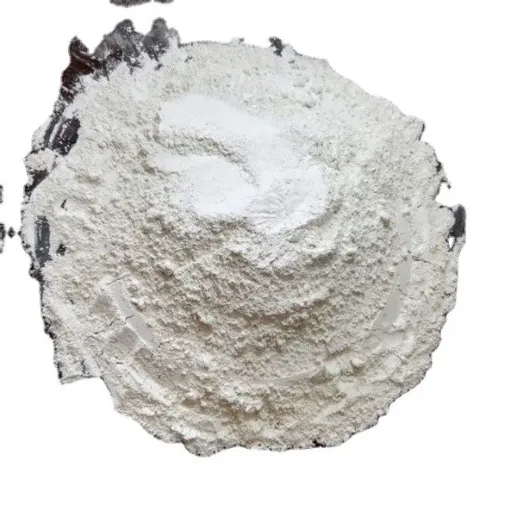 Read More
 -
Bone Ash in Copper Casting Mold Release: Application and Practical Guidance
August 14, 2026A copper sand casting foundry in India was producing electrical switch components that required a clean, smooth surface finish for Read More
 -
How to Source Bone Ash for Foundry Applications: A Buyer's Checklist
August 13, 2026A purchasing manager at a brass foundry in Egypt ordered 20 metric tons of bone ash from a new supplier at a price roughly 25% bel Read More
 -
Bone Ash vs Graphite Powder for Non-Ferrous Metal Mold Release
August 12, 2026A brass foundry in Southeast Asia switched from bone ash to a lower-cost graphite powder for its sand casting release agent, expec Read More

Contact Us
Recommended Products
-
 Manufacturer Sell Low Price Calcined Bone Ash or PowderUS$ 850MOQ: 5 Tons
 -
Manufacturer Sell Low Price Calcined Bone Ash or PowderUS$ 850MOQ: 5 Tons
-
Manufacturer Sell Low Price Calcined Bone Ash or PowderUS$ 850MOQ: 5 Tons
-
Sell Well Bone Ash for Mold Releasing UseUS$ 880 - 920MOQ: 5 Tons
-
Feilong Direct Sales Die-casting Water-soluble Mold Metal Release AgentUS$ 920MOQ: 5 Tons
-
Natural Animal Bone AshUS$ 880 - 920MOQ: 5 Tons
-
China Manufacturer Supply Eco-Friendly Bone Ash PowderUS$ 890MOQ: 1 Ton
-
Calcined Bone Ash for Bone China With GoodPriceUS$ 880 - 920MOQ: 5 Tons
-
Synthetic Bone Ash for Ceramic With Good PriceUS$ 850MOQ: 5 Tons
-
Calcium and Phosphorus Powder - 325 MeshPowderUS$ 850MOQ: 5 Tons
-
Calcium and Phosphorus Powder - 325 MeshPowderUS$ 850MOQ: 5 Tons
-
Calcium Stearate PVC PE Lubricant Mould-releasing Powder ManufacturerUS$ 850MOQ: 5 Tons
-
Reputed Supplier Selling Bone Ash Powder Which Meet With Environmental Standard As Animal FeedstuffUS$ 850MOQ: 5 Tons
-
Industrial Grade Bone Ash for Bone Ceramics and MetallurgyUS$ 900MOQ: 10 Tons
-
Animal Ashes Used for Bone ChinaUS$ 900MOQ: 5 Tons
-
Calcium and Phosphorus Powder - 325 MeshPowderUS$ 850MOQ: 5 Tons
-
High Quality Bone Ash for Mold Releasing Use/bone Ash PowderUS$ 850 - 880MOQ: 5 Tons
-
Manufacturer Sell Low Price Calcined Bone Ash or PowderUS$ 850MOQ: 5 Tons
-
Calcined Bone Ash for Bone China With GoodPriceUS$ 880MOQ: 5 Tons
-
High Quality Bone Ash for Mold Releasing Use/bone Ash PowderUS$ 880 - 920MOQ: 5 Tons