
 Business License

Bone Ash in Copper Casting Mold Release: Application and Practical Guidance
A copper sand casting foundry in India was producing electrical switch components that required a clean, smooth surface finish for arc-quenching performance. The foundry had been using a commercial parting compound that worked adequately for most castings but occasionally left a residue that required manual grinding before the parts could proceed to machining. When a production order for 5,000 switch housings came in with a tightened surface finish requirement, the foundry's rejection rate on the parting compound reached roughly 12%, well above the 3% threshold that the order's margin could absorb. The foundry switched to a bone ash parting agent applied as a dry dusting on the sand mold surface.
Within the first production run using bone ash, the rejection rate dropped below 2%, and the parts met the surface finish specification without additional grinding. Copper casting presents specific challenges for mold release that make bone ash a particularly well-suited choice, provided it is applied correctly and the material quality is consistent.
1. Why Copper Casting Needs Specialized Release Agents
Copper and its alloys present several characteristics that make mold release more demanding than in ferrous metal casting. The pouring temperature of copper alloys, typically in the range of 1,050 to 1,150 degrees Celsius depending on the specific alloy composition, is high enough to degrade many common release agents. Any organic component in the release agent will burn off at these temperatures, and some inorganic compounds will soften, melt, or react with the molten copper.
Copper's high density also contributes to release challenges. Molten copper exerts greater hydrostatic pressure on the mold surface than lighter metals like aluminum, which can force the metal into microscopic surface pores and create mechanical interlocking between the casting and the mold. A release agent for copper must be applied as a continuous film that bridges these surface pores and prevents metal penetration, not just as a light dusting that can be displaced by the weight of the metal.
The thermal conductivity of copper is roughly five times higher than that of cast iron, which means the heat from the molten metal transfers rapidly into the mold material. This rapid heat transfer can create thermal shock at the mold surface, potentially causing the mold material to spall or crack if the release coating does not provide a degree of thermal insulation between the metal and the mold. Bone ash, with its relatively low thermal conductivity compared to graphite, provides this insulating function as a secondary benefit of its release action.
2. How Bone Ash Performs in Copper Casting
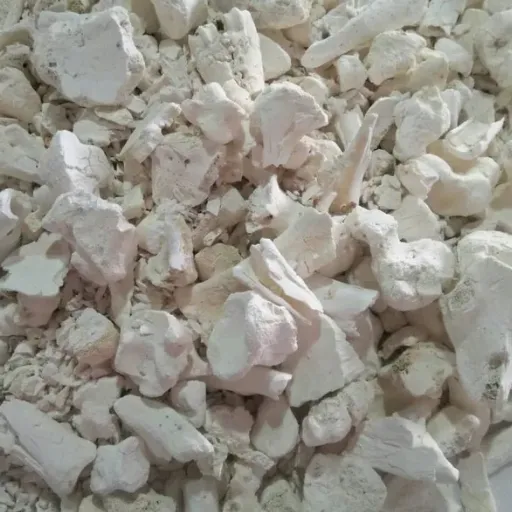
Bone ash functions in copper casting through three complementary mechanisms. The primary mechanism is physical separation: a thin layer of bone ash particles creates a barrier between the molten copper and the mold surface, preventing direct contact that would otherwise lead to adhesion. The bone ash particles are angular and mechanically interlock with each other when compressed against the mold surface, forming a cohesive film that resists displacement by the flowing metal.
The second mechanism is chemical inertness. Bone ash is calcium phosphate in the form of hydroxyapatite, which does not react with copper at casting temperatures. This is a critical advantage because chemical reactions between the release agent and the molten metal can produce surface defects, alter the alloy composition at the casting surface, or generate gas that becomes trapped as porosity. The chemical stability of bone ash means that the release function operates without introducing new variables into the casting process.
The third mechanism is thermal moderation. The bone ash layer absorbs some of the initial thermal shock when the molten copper contacts the mold, protecting the mold surface from rapid temperature change and reducing the risk of mold material spalling. This thermal buffering effect is particularly valuable in permanent mold casting, where the mold is reused for multiple cycles and thermal fatigue is a primary failure mode.
3. Application Methods for Copper Casting
Dry dusting is the most common application method for bone ash in copper sand casting. The operator uses a dusting bag, a bellows-type applicator, or a wide brush to distribute a thin, uniform layer of bone ash powder over the mold cavity surface immediately before mold closure. The goal is complete coverage without excess material that could become entrained in the metal stream and create inclusions in the casting.
For dry dusting to be effective, the mold surface should be free of loose sand grains and residual moisture before the bone ash is applied. The bone ash itself must be dry and free-flowing, without clumps that would create uneven coverage. Operators typically apply the powder in two light passes rather than one heavy pass, as this technique produces more uniform coverage and reduces the risk of excess powder accumulating in mold cavities and corners.
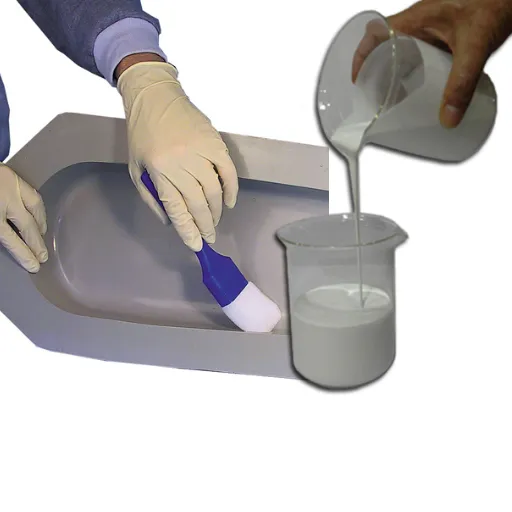
Slurry application is an alternative method used when greater coating thickness or uniformity is required. The bone ash is mixed with water to form a thin paste or slurry, which is then brushed, sprayed, or swabbed onto the mold surface and allowed to dry before pouring. The slurry method produces a denser, more adherent coating than dry dusting but requires additional drying time, which can slow the production cycle. Slurry application is more commonly used in permanent mold and die casting of copper alloys, where the mold is reused and the coating must survive multiple casting cycles.
The table below compares the dry dusting and slurry application methods for copper casting.
| Parameter | Dry Dusting | Slurry Application |
|---|---|---|
| Coating thickness | Thin, approximately 0.1–0.3 mm | Thicker, approximately 0.3–0.8 mm |
| Coverage uniformity | Operator-dependent | More uniform with spraying |
| Cycle time impact | Minimal, applied just before pouring | Requires drying time after application |
| Coating durability | Single pour | Multiple pours possible in permanent molds |
| Risk of inclusions | Higher if over-applied | Lower, coating is denser and more adherent |
4. Particle Size Selection for Copper Casting
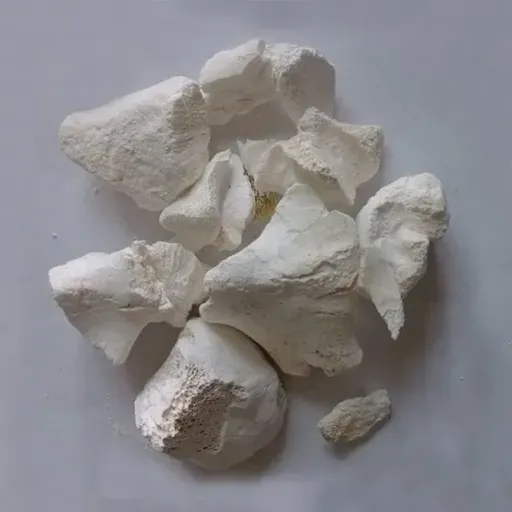
Particle size is a critical variable in bone ash performance for copper casting. The ideal particle size range provides a balance between coverage, coating integrity, and handling characteristics. Bone ash that is too fine, below roughly 325 mesh, can become airborne during application, creating a dusty work environment and making it difficult for the operator to see where the coating has been applied. Bone ash that is too coarse, above roughly 100 mesh, may not fill surface pores adequately and can leave visible texture on the casting surface.
For copper sand casting, a bone ash in the 150 to 250 mesh range is a common starting point. This particle size range provides good flowability from a dusting bag, adequate pore-filling capacity on sand mold surfaces, and a coating that releases cleanly after solidification. Foundries casting larger copper parts, where the mold surface area is substantial and the operator needs to cover the cavity quickly, may prefer a coarser grade in the 100 to 200 mesh range that flows more freely and covers faster.
Feilong Bone Carbon supplies bone ash in multiple particle size grades to accommodate different foundry preferences. The company's grinding and screening process is adjusted to produce consistent particle size distributions within the specified range, which helps foundry operators develop a repeatable application technique without having to compensate for batch-to-batch particle size variation.
5. Application Technique: Getting Consistent Results
The most common cause of bone ash-related casting defects is inconsistent application rather than material quality. A coating that is too thin in some areas and too thick in others produces uneven release, with the thin areas potentially allowing metal-to-mold contact and the thick areas potentially shedding excess powder into the metal stream. Developing a repeatable application technique is the single most important factor in getting consistent release performance from bone ash.
For dry dusting, the operator should hold the applicator at a consistent distance from the mold surface, typically 20 to 30 centimeters, and use a sweeping motion that overlaps slightly on each pass. The objective is a visible but translucent coating through which the mold surface texture can still be discerned. If the coating is opaque white and the mold surface is no longer visible through it, too much powder has been applied and some should be removed by gently blowing or brushing away the excess before mold closure.
Visual inspection after application is a simple but effective quality check. The coated mold surface should appear uniformly dusted without bare spots, streaks, or accumulation of powder in corners and recesses. Any areas that appear bare should be re-dusted before mold closure. This visual check takes only a few seconds per mold but can prevent hours of rework on a defective casting.
6. Troubleshooting Common Copper Casting Release Problems
When a copper casting sticks to the mold despite the use of bone ash, the problem usually traces to one of several common causes. Insufficient coating thickness is the most frequent issue, particularly in deep mold cavities where the operator may have difficulty reaching all surfaces with the dusting applicator. Mold surface contamination with moisture, oil, or residual metal from a previous pour can also compromise release by preventing the bone ash from adhering uniformly.
Excessive moisture in the bone ash itself can cause clumping during application and create local weak spots in the coating. Bone ash that has been stored in humid conditions should be dried before use and screened to break up any clumps that have formed. A quick field test is to squeeze a handful of bone ash powder: it should flow freely between the fingers without clumping or feeling damp.
Mold temperature can also affect release performance, particularly in permanent mold casting. If the mold is too cold when the bone ash slurry is applied, the water in the slurry may not evaporate completely before pouring, which can generate steam that may disrupt the coating. If the mold is too hot, the slurry may dry too quickly and crack, creating channels through which molten copper can contact the mold surface. Operators develop a sense of the correct mold temperature range through experience, but a contact pyrometer reading of roughly 150 to 250 degrees Celsius at the time of slurry application is a common target range.
7. Case Study: Copper Valve Body Casting
A foundry in Eastern Europe casting bronze valve bodies by sand casting struggled with inconsistent release on a valve body pattern that had a deep, narrow core cavity. The standard parting compound was not reaching the bottom of the cavity when applied by dusting, and switching to a spray-applied slurry required production to pause for drying. The foundry modified its application procedure by using a long-reach dusting tube attached to a bellows applicator, which allowed the operator to direct bone ash powder into the bottom of the core cavity before coating the rest of the mold. The new procedure reduced release-related defects on this pattern from roughly 8% to below 2%, and the pattern became one of the foundry's more reliable production items despite its challenging geometry.
8. Case Study: High-Volume Copper Electrical Component Production
A copper foundry producing electrical terminals on a high-volume permanent mold line tested bone ash slurry against its existing commercial release coating over a 1,000-cycle trial. The bone ash coating was reapplied every 8 to 10 cycles compared to every 5 to 7 cycles for the commercial coating, reducing application downtime by roughly 15% over the trial period. The casting surface finish was comparable between the two coatings, and the foundry adopted bone ash for this production line based on the productivity improvement.
9. Frequently Asked Questions
9.1 How much bone ash is typically used per mold in copper casting?
The amount of bone ash used per mold depends on the mold surface area and the application method. For a typical sand mold with a surface area of roughly 0.3 to 0.5 square meters, a dry dusting application uses approximately 30 to 50 grams of bone ash powder. This translates to roughly 20 to 30 kilograms of bone ash per metric ton of copper cast, though the actual consumption varies significantly with part geometry, mold configuration, and operator technique.
9.2 Can the same bone ash be used for different copper alloys?
Yes, bone ash is chemically inert toward all common copper alloys including pure copper, brass, bronze, and copper-nickel, so the same grade of bone ash can be used across different alloy families within the same foundry. The alloy does not affect the choice of bone ash grade, though the casting temperature difference between pure copper and high-zinc brass may influence whether the foundry prefers dry dusting or slurry application for a given alloy.
9.3 Does bone ash affect the surface quality of machined copper castings?
Bone ash residue on the casting surface is easily removed by standard cleaning processes such as shot blasting, wire brushing, or chemical cleaning, and it does not leave any chemical residue that would affect subsequent machining operations. Copper castings produced with bone ash parting agent typically show clean, smooth surfaces after cleaning, with no carbon pickup or other surface chemistry changes that could affect machinability or the performance of the finished part.
9.4 How should bone ash be stored to maintain application quality?
Bone ash should be stored in a dry, covered area in sealed containers or bags. Exposure to moisture causes the powder to clump, making uniform application difficult. If the material has been exposed to humidity and shows signs of clumping, it can be restored by drying in a low-temperature oven and passing through a screen to break up agglomerates. The material does not degrade chemically over time when stored properly, so foundries can maintain an inventory without concern for shelf life limitations.
Recently Posted
-
Luohe Feilong Bone Carbon: Industrial Bone Ash Manufacturer Since 2011
August 17, 2026When a copper foundry in Turkey needs bone ash that releases cleanly from a sand mold at 1,100 degrees Celsius, or a bone china fa Read More
 -
How to Source Bone Ash for Foundry Applications: A Buyer's Checklist
August 13, 2026A purchasing manager at a brass foundry in Egypt ordered 20 metric tons of bone ash from a new supplier at a price roughly 25% bel Read More
 -
Bone Ash vs Graphite Powder for Non-Ferrous Metal Mold Release
August 12, 2026A brass foundry in Southeast Asia switched from bone ash to a lower-cost graphite powder for its sand casting release agent, expec Read More
 -
What Is Industrial Bone Ash? A Guide for Foundry and Ceramic Buyers
August 11, 2026A copper foundry manager in Turkey once rejected three consecutive shipments of bone ash because the material was acting more like Read More

Contact Us
Recommended Products
-
 Manufacturer Sell Low Price Calcined Bone Ash or PowderUS$ 850MOQ: 5 Tons
 -
Manufacturer Sell Low Price Calcined Bone Ash or PowderUS$ 850MOQ: 5 Tons
-
Manufacturer Sell Low Price Calcined Bone Ash or PowderUS$ 850MOQ: 5 Tons
-
Sell Well Bone Ash for Mold Releasing UseUS$ 880 - 920MOQ: 5 Tons
-
Feilong Direct Sales Die-casting Water-soluble Mold Metal Release AgentUS$ 920MOQ: 5 Tons
-
Natural Animal Bone AshUS$ 880 - 920MOQ: 5 Tons
-
China Manufacturer Supply Eco-Friendly Bone Ash PowderUS$ 890MOQ: 1 Ton
-
Calcined Bone Ash for Bone China With GoodPriceUS$ 880 - 920MOQ: 5 Tons
-
Synthetic Bone Ash for Ceramic With Good PriceUS$ 850MOQ: 5 Tons
-
Calcium and Phosphorus Powder - 325 MeshPowderUS$ 850MOQ: 5 Tons
-
Calcium and Phosphorus Powder - 325 MeshPowderUS$ 850MOQ: 5 Tons
-
Calcium Stearate PVC PE Lubricant Mould-releasing Powder ManufacturerUS$ 850MOQ: 5 Tons
-
Reputed Supplier Selling Bone Ash Powder Which Meet With Environmental Standard As Animal FeedstuffUS$ 850MOQ: 5 Tons
-
Industrial Grade Bone Ash for Bone Ceramics and MetallurgyUS$ 900MOQ: 10 Tons
-
Animal Ashes Used for Bone ChinaUS$ 900MOQ: 5 Tons
-
Calcium and Phosphorus Powder - 325 MeshPowderUS$ 850MOQ: 5 Tons
-
High Quality Bone Ash for Mold Releasing Use/bone Ash PowderUS$ 850 - 880MOQ: 5 Tons
-
Manufacturer Sell Low Price Calcined Bone Ash or PowderUS$ 850MOQ: 5 Tons
-
Calcined Bone Ash for Bone China With GoodPriceUS$ 880MOQ: 5 Tons
-
High Quality Bone Ash for Mold Releasing Use/bone Ash PowderUS$ 880 - 920MOQ: 5 Tons