
 Business License

Bone Ash in Bone China: How Calcined Bone Creates Translucent Ceramics
Pick up a piece of fine bone china and hold it to the light. That warm glow passing through the wall is not a trick of glaze chemistry or kiln atmosphere. It comes from a single raw material: bone ash.
For ceramic manufacturers, bone ash in bone china is not a minor ingredient. It makes up 40-50% of the ceramic body, and its purity, particle size, and chemical composition determine whether your finished ware has the translucency, whiteness, and strength that define genuine bone china. Get the bone ash wrong, and no amount of firing adjustment will save the batch.
This guide explains exactly how bone ash functions in bone china production, what specifications matter, and how to source material that delivers consistent results on your production line. Whether you are formulating a new bone china body or troubleshooting quality issues with your current supplier, the technical details here will help you make informed procurement decisions.
Looking for ceramic-grade bone ash right now? Request a sample with full COA from Feilong or contact our technical team to discuss your formulation requirements.
What Makes Bone China Different from Other Ceramics
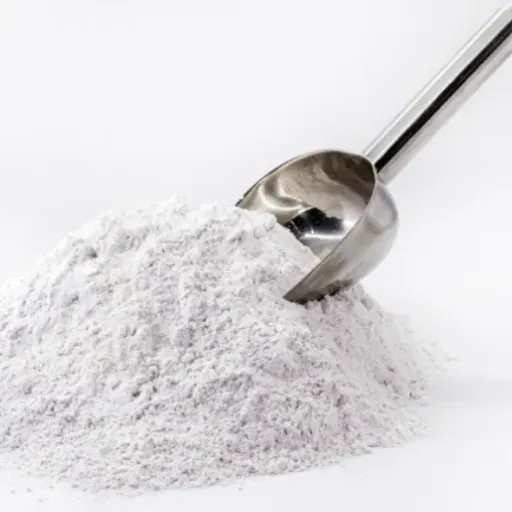
Bone china is not porcelain with bone ash added. It is a distinct ceramic category with its own mineralogy, firing behavior, and end-use properties. Understanding this distinction helps procurement managers and ceramic engineers appreciate why the quality of bone ash in bone china matters so much. Among all bone china raw materials, calcined bone ash has the greatest influence on final product quality.
Standard porcelain bodies rely on kaolin, feldspar, and quartz. Bone china replaces a significant portion of those traditional fluxes and fillers with calcined bone ash. The result is a ceramic body that fires to a hard, dense state at lower temperatures than most porcelains, while developing the translucency that no other ceramic type can match at comparable wall thickness.
The British Standards Institution defines bone china as containing a minimum of 35% bone ash (tricalcium phosphate) in the body formulation. Most high-quality manufacturers work in the 40-50% range. At these levels, the bone ash is not a filler. It is the primary structural and optical component of the ceramic.
The Three Properties Bone Ash Gives Bone China
Bone ash contributes three properties that no other raw material provides simultaneously:
Translucency: The calcium phosphate in bone ash forms a glassy phase during firing that transmits light through thin sections
Whiteness: Properly calcined bone ash is naturally white, producing the warm ivory-white tone prized in fine tableware
Strength: Despite its translucency, bone china with the right bone ash content is remarkably durable and chip-resistant
Remove or degrade the bone ash quality, and all three properties suffer. This is why ceramic manufacturers treat bone ash sourcing as a critical quality decision, not a commodity purchase.
How Bone Ash Creates Translucency in Bone China
The translucency of bone china is its defining characteristic, and bone ash is the only ingredient that makes it possible. Understanding the mechanism helps ceramic engineers control the outcome and helps procurement managers specify the right material.
When bone ash enters a ceramic body, it carries calcium phosphate (primarily as tricalcium phosphate and calcium carbonate) into the formulation. During firing, typically between 1200°C and 1280°C, these compounds react with the other body components, kaolin, feldspar, and quartz, to form a glassy matrix.
This glassy phase has a refractive index that allows visible light to pass through thin ceramic walls. The more of this material in the body, within the workable range, the greater the translucency. However, there is a practical limit. Bodies with more than about 50% bone ash become increasingly difficult to form and fire without warping.
The key variable is not just how much bone ash is present, but how well it is distributed in the body. Powder with inconsistent particle size creates localized concentrations of calcium phosphate. These areas develop different glass-phase characteristics during firing, producing uneven translucency or visible streaks in the finished ware.
When Thomas Harrington, a production manager at a Staffordshire bone china factory, noticed uneven translucency in a batch of teacups in 2023, his first instinct was to adjust the kiln temperature profile. The kiln was running correctly. The slip formulation had not changed. The problem turned out to be a new bone ash shipment with a wider particle size distribution than his usual supply. The coarser particles did not fully integrate into the glass phase, leaving denser zones that blocked light. He switched back to his previous supplier and the problem disappeared.
This kind of production disruption is invisible on a standard Certificate of Analysis. The Ca and P numbers look fine. The issue is in the physical characteristics of the powder, the particle size distribution, the median diameter, and the percentage of oversize material. These are the specifications that separate bone ash that works in bone china from bone ash that causes problems.
Chemical Composition Requirements for Bone China Production
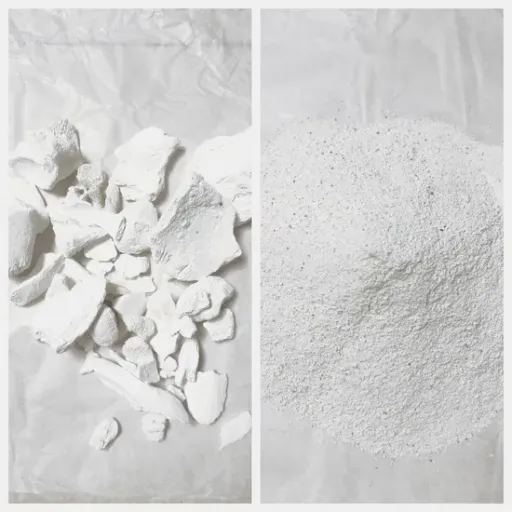
Not all bone ash is suitable for bone china. The ceramic application imposes the strictest purity requirements of any bone ash use case. Here are the bone ash specifications that matter for ceramic production.
Essential Chemical Parameters
| Parameter | Specification | Why It Matters |
|---|---|---|
| Calcium (Ca) | ≥35.0% | Primary glass-phase former; determines translucency potential |
| Phosphorus (P) | ≥16.0% | Combines with calcium to form tricalcium phosphate structure |
| Iron (Fe) | ≤0.05% | Causes gray or yellow discoloration in fired ware |
| Burning loss | ≤1.0% | Excess loss indicates residual organic matter that creates bubbles and defects |
| pH | 9.0-11.5 | Affects slip chemistry and deflocculant requirements |
Why Iron Content Is Critical
Of these parameters, iron content deserves special attention. Iron oxide is a powerful colorant in ceramic bodies. Even at levels that seem low on paper, 0.08% or 0.10%, it can shift the fired color from warm ivory to gray or yellowish.
Bone china is fired in an oxidizing atmosphere, which means any iron present will develop its full color. Unlike some stoneware bodies where iron contributes desirable speckling or reduction-fired color, bone china demands near-zero iron for its characteristic clean whiteness.
Ceramic-grade bone ash should consistently test at Fe ≤0.05%. Some manufacturers specify even lower limits for premium tableware production. When evaluating suppliers, ask for historical batch data showing iron content trends, not just a single COA. Consistency over time is what protects your production line.
The Role of Burning Loss
Burning loss measures the percentage of material that volatilizes during ignition testing. In bone ash, this primarily reflects residual organic compounds that the calcination process did not fully remove.
High burning loss (above 1.0%) indicates under-calcined material. When this bone ash enters a ceramic body and is fired, the residual organics decompose, releasing gases that create bubbles in the glass phase. These bubbles appear as pinholes, blisters, or cloudiness in the fired ware.
For bone china, where surface quality and optical clarity are paramount, burning loss above 1.0% is a rejectable defect. Always verify this parameter on incoming material.
Choosing the Right Mesh Size for Bone China Formulation
Particle size is one of the most consequential specifications when sourcing bone ash in bone china production. The two standard grades, 325 mesh and 400 mesh bone ash powder, serve different formulation needs.
325 Mesh Bone Ash
325 mesh corresponds to approximately 44 micrometers. This is the standard grade for most bone china production. It balances fineness with handling characteristics and integrates well into conventional slip preparation.
325 mesh bone ash is suitable when:
You are producing standard bone china with 40-50% bone ash content
Your formulation includes other fine-ground materials that blend well at this particle size
You need reliable flow characteristics in slip preparation
Cost optimization is a factor (325 mesh is typically more economical)
400 Mesh Bone Ash
400 mesh corresponds to approximately 37 micrometers. This finer grade is preferred for premium and specialized applications.
400 mesh bone ash is the better choice when:
You are producing ultra-fine bone china with exceptional translucency
Your wall thickness targets are very thin (under 2mm)
You need improved surface finish on delicate forms
Your formulation benefits from tighter particle packing
How Mesh Size Affects Production
Switching from 325 mesh to 400 mesh is not a simple substitution. The finer particle size increases surface area, which affects several process parameters:
Slip viscosity: Finer bone ash requires more water to achieve the same flow characteristics, or adjustment of deflocculant levels
Drying behavior: Finer particles can increase drying shrinkage and sensitivity to cracking
Firing behavior: Finer bone ash may react more completely with other body components, potentially lowering maturation temperature
Always conduct production trials when changing mesh size. Request samples of both grades and evaluate them in your actual slip formulation and firing schedule before committing to a bulk order. Our guide to selecting bone ash mesh size provides detailed comparison data.
How Calcination Temperature Affects Bone Ash Quality
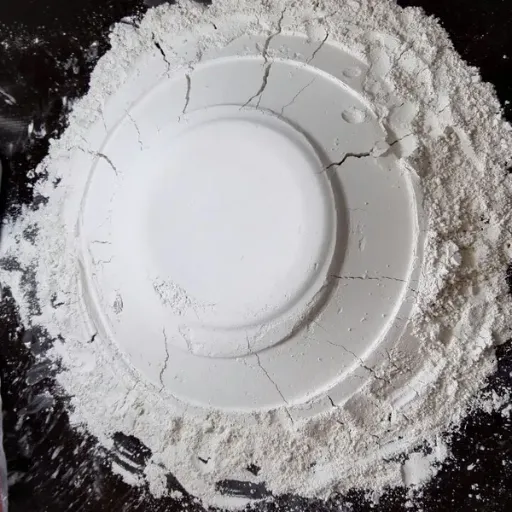
The calcination temperature at which bone ash is produced has a direct and measurable effect on its performance in bone china. Not all bone ash on the market is calcined under the same conditions, and this variation explains much of the quality inconsistency that ceramic manufacturers encounter.
The 1300°C Standard
Industrial-grade bone ash for ceramics is typically calcined at approximately 1300°C. At this temperature:
Organic compounds are fully decomposed (low burning loss)
Calcium phosphate achieves the crystalline structure needed for glass-phase formation
The material reaches the white color required for ceramic applications
Iron-bearing impurities are oxidized to their stable forms
What Happens Below 1300°C
Bone ash calcined at lower temperatures, say 1100°C or 1200°C, may retain residual organic matter. This increases burning loss and introduces the risk of gas evolution during ceramic firing. The color may also be slightly off-white or cream rather than pure white.
Some suppliers offer lower-temperature bone ash at reduced prices. For feed or industrial applications, this may be acceptable. For bone china, the cost savings are not worth the production risk.
What Happens Above 1300°C
Excessively high calcination temperatures can alter the crystalline structure of calcium phosphate, potentially reducing its reactivity in the ceramic body. While this is less common than under-calcination, it highlights the importance of controlled process conditions.
The goal is consistent calcination at the right temperature, batch after batch. This requires furnace control, not just high heat. A supplier who can document their calcination protocol and demonstrate batch-to-batch consistency is more valuable than one who simply claims "high temperature."
Luohe Feilong Bone Carbon Co., Ltd. calcines bone ash at 1300°C in controlled furnaces as part of a vertically integrated production process. Every batch is tested for chemical composition and physical properties before release. Learn more about our production process.
Common Quality Issues When Sourcing Bone Ash for Bone China
Ceramic manufacturers who source bone ash internationally encounter recurring quality problems. Recognizing these issues before they affect production saves time, material, and customer relationships.
Inconsistent Particle Size Distribution
This is the most common and most damaging quality issue. Two shipments can have identical Ca, P, and Fe values but very different particle size distributions. The wider the distribution, the less predictable the behavior in slip preparation and firing.
Request particle size distribution data, not just a mesh size specification. Ask for D10, D50, and D90 values. A supplier who cannot provide this data is not controlling their grinding process tightly enough for ceramic applications.
Batch-to-Batch Composition Variation
Bone ash sourced from trading companies or aggregators often shows composition drift between batches. This happens because the material may come from different production workshops with different raw material sources and process controls.
For bone china production, where formulation consistency is critical, even small variations in Ca/P ratio or iron content can cause noticeable differences in fired results. Specify acceptable ranges in your purchase agreement and verify with incoming inspection.
Contamination from Handling and Packaging
Bone ash is a fine powder that readily absorbs contaminants from handling equipment, packaging materials, and storage environments. Metal fragments from grinding equipment, moisture from improper storage, or cross-contamination from other products can all compromise ceramic-grade material.
Look for suppliers who use dedicated production lines for ceramic-grade material, package in clean, moisture-resistant containers, and provide documentation of their handling procedures.
Misrepresentation of Grade
Not every supplier who labels their product "ceramic-grade bone ash" has tested it in ceramic applications. Some apply the label based on chemical composition alone, without understanding the physical and performance requirements.
Ask potential suppliers for references from ceramic manufacturers. Request technical data beyond basic chemical analysis. A supplier with genuine ceramic-grade material will have the documentation and the customer base to support their claims.
How to Evaluate a Bone Ash Supplier for Bone China Production
Selecting a bone ash supplier for bone china is a technical decision that affects every production run. Here is a practical evaluation framework.
Questions to Ask Every Supplier
Do you own your calcination and grinding facilities, or do you source from multiple producers?
What is your standard calcination temperature and how do you control it?
Can you provide particle size distribution data (D10, D50, D90) with each shipment?
What is your typical batch-to-batch variation for Ca, P, and Fe?
Can you provide references from ceramic or bone china manufacturers?
What is your minimum order quantity and sample availability?
What the Answers Reveal
Suppliers who own their facilities and control the full production process can answer these questions with data. Those who trade material from multiple sources will give vague answers or deflect.
A manufacturer with 20 years of production experience, like Feilong, has the process knowledge and quality history that ceramic buyers need. A new trading operation may offer lower prices. It cannot offer the same consistency guarantee.
Sample Evaluation Protocol
Before committing to a new supplier:
Request samples of 1-2 kg with full COA including chemical composition, particle size distribution, and burning loss
Run the sample through your standard slip preparation and note any changes in viscosity or settling behavior
Fire test pieces at your normal schedule and evaluate translucency, whiteness, and surface quality
Compare results against your current supplier's material using the same evaluation criteria
Document everything for future reference and quality trending
This process takes effort. It prevents the much larger cost of production disruptions from incompatible material.
Ready to evaluate Feilong bone ash for your bone china production? Request a sample batch with full COA and test it in your formulation before committing to bulk supply.
Conclusion
Bone ash in bone china is not a commodity ingredient. It is the defining component that gives this ceramic type its translucency, whiteness, and strength. The calcium phosphate content, particle size distribution, iron level, and calcination consistency of your bone ash directly determine the quality of your finished ware.
Key takeaways for ceramic manufacturers and procurement managers:
Bone china requires 40-50% bone ash in the body, making bone ash quality the single largest variable in production outcomes
Iron content must stay at or below 0.05% to prevent discoloration in fired ware
Particle size distribution matters as much as mesh size specification; request D10, D50, and D90 data
Calcination at 1300°C produces the crystalline structure and low burning loss that ceramic applications demand
Always evaluate new suppliers with production trials, not just paper specifications
Vertically integrated manufacturers with their own calcination facilities offer the best consistency guarantee
At Luohe Feilong Bone Carbon Co., Ltd., we have manufactured bone ash from defatted bovine bone for over 20 years. Our 1300°C calcination process, batch testing, and documented COAs deliver the consistency that bone china manufacturers depend on. We export ceramic-grade bone ash to buyers in Germany, South Korea, the United States, and other markets.
Need bone ash for your bone china production? Request a quote or speak with our team to discuss your specifications, order samples, or arrange a bulk supply agreement.
Recently Posted
-
What Is a Cupel? Composition, Manufacturing, and Uses in Precious Metal Assay
June 8, 2026In 1872, a California assayer named Jacob could determine the gold content of an ore sample to within one-tenth of an ounce using Read More
 -
Fire Assay Cupel: Material Selection and Performance in Precious Metal Analysis
June 8, 2026In 2023, a Canadian gold refinery traced a three-month pattern of inconsistent assay results to a single variable: the cupels. The Read More
 -
The Fire Assay Process: A Complete Guide for Precious Metal Labs
June 8, 2026In March 2024, a gold assay laboratory in Western Australia noticed their recovery rates had drifted by 0.3%. For most industries, Read More
 -
Bone Ash Calcium Phosphate: What Industrial Buyers Need to Know About the Chemistry
June 8, 2026In 2022, a ceramic raw materials lab in Foshan received a shipment of what the certificate labeled as "ceramic-grade calcium Read More

Contact Us
Recommended Products
-
 Manufacturer Sell Low Price Calcined Bone Ash or PowderUS$ 850MOQ: 5 Tons
 -
Manufacturer Sell Low Price Calcined Bone Ash or PowderUS$ 850MOQ: 5 Tons
-
Manufacturer Sell Low Price Calcined Bone Ash or PowderUS$ 850MOQ: 5 Tons
-
Sell Well Bone Ash for Mold Releasing UseUS$ 820MOQ: 5 Tons
-
Feilong Direct Sales Die-casting Water-soluble Mold Metal Release AgentUS$ 820MOQ: 5 Tons
-
Natural Animal Bone AshUS$ 820MOQ: 5 Tons
-
China Manufacturer Supply Eco-Friendly Bone Ash PowderUS$ 890MOQ: 1 Ton
-
Calcined Bone Ash for Bone China With GoodPriceUS$ 820MOQ: 5 Tons
-
Synthetic Bone Ash for Ceramic With Good PriceUS$ 850MOQ: 5 Tons
-
Calcium and Phosphorus Powder - 325 MeshPowderUS$ 850MOQ: 5 Tons
-
Calcium and Phosphorus Powder - 325 MeshPowderUS$ 850MOQ: 5 Tons
-
Calcium Stearate PVC PE Lubricant Mould-releasing Powder ManufacturerUS$ 850MOQ: 5 Tons
-
Reputed Supplier Selling Bone Ash Powder Which Meet With Environmental Standard As Animal FeedstuffUS$ 850MOQ: 5 Tons
-
Industrial Grade Bone Ash for Bone Ceramics and MetallurgyUS$ 900MOQ: 5 Tons
-
Animal Ashes Used for Bone ChinaUS$ 900MOQ: 5 Tons
-
Calcium and Phosphorus Powder - 325 MeshPowderUS$ 850MOQ: 5 Tons
-
High Quality Bone Ash for Mold Releasing Use/bone Ash PowderUS$ 820MOQ: 5 Tons
-
Manufacturer Sell Low Price Calcined Bone Ash or PowderUS$ 850MOQ: 5 Tons
-
Calcined Bone Ash for Bone China With GoodPriceUS$ 820MOQ: 5 Tons
-
High Quality Bone Ash for Mold Releasing Use/bone Ash PowderUS$ 820MOQ: 5 Tons