
 Business License

Bone Ash for Bone China: A Technical Sourcing Guide
Bone china without the right bone ash is just porcelain with a promise it cannot keep. The translucency, strength, and warm white tone that distinguish bone china from other ceramics all depend on the quality and consistency of the bone ash in the body recipe.
If you produce bone ash for bone china, you already know that typical formulations contain 40-50% bone ash by weight. This high loading makes ceramic bone ash the dominant raw material after water. What separates a reliable batch from a problematic one is not the presence of bone ash, but its chemical purity, particle size, and batch-to-batch stability.
In this guide, we explain the technical requirements for sourcing bone ash for bone china production. You will learn the exact chemical specifications to request, how to choose between 325 mesh and 400 mesh grades, how bone ash interacts with kaolin and feldspar, and what to look for when qualifying a supplier.
Need bone china-grade bone ash for testing? Request a free sample with full COA and evaluate Feilong bone ash in your own formulation.
Why Bone Ash Defines Bone China
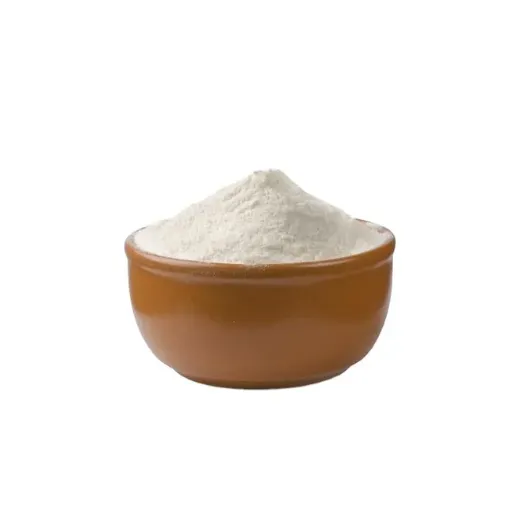
Bone china is a type of soft-paste porcelain that contains bone ash as a major body component. The bone ash contributes three properties that are difficult to achieve with synthetic alternatives:
Translucency: Thin-walled bone china transmits light because bone ash modifies how light passes through the fired body
Strength: Despite the thin walls, bone china resists chipping and thermal shock better than standard porcelain
Whiteness: Bone ash produces a warm, milky white tone rather than the bluish white of hard-paste porcelain
These properties emerge from the calcium phosphate and calcium carbonate structure formed when defatted bovine bone is calcined at high temperature. Learn more about the general composition of bone ash.
The typical bone china body contains:
40-50% bone ash
20-30% kaolin
20-30% feldspar
0-10% other fluxes or additives
Because bone ash makes up nearly half the body, variations in its chemistry ripple through every stage of production. A change in calcium content shifts the maturation temperature. A change in iron content affects the final color. A change in particle size changes slip rheology and fired density.
Bone Ash vs. Synthetic Calcium Phosphate
Some manufacturers experiment with synthetic calcium phosphate as a bone ash replacement. While synthetic materials can match the chemical formula, they rarely replicate the full microstructure and behavior of calcined bone ash. Bone ash contains a complex mixture of calcium phosphate, calcium carbonate, and residual trace minerals that interact with the ceramic body during firing in ways that synthetic powders do not fully duplicate.
For high-grade bone china, most experienced manufacturers continue to use natural calcined bone ash.
Chemical Specifications for Bone China Production
Not every calcined bone ash performs well in bone china. The following specifications are the starting point for most ceramic buyers:
| Specification | Target Value | Why It Matters for Bone China |
|---|---|---|
| Calcium (Ca) | ≥35.0% | Main mineral component; affects translucency and body maturity |
| Phosphorus (P) | ≥16.0% | Indicates calcium phosphate content; contributes strength |
| Iron (Fe) | ≤0.05% | Prevents discoloration and gray spotting in fired ware |
| Burning loss | ≤1.0% | Shows complete calcination; high values cause defects |
| pH | 9.0-11.5 | Affects slip stability and deflocculation behavior |
| Color | White crystals or powder | Visual indicator of purity |
Industry associations such as the British Ceramic Confederation emphasize that consistent raw material quality is essential for ceramic manufacturers supplying premium markets. When Lisa Brennan, a ceramic engineer at an Irish tableware manufacturer, noticed inconsistent translucency across production lots in 2023, her team traced the issue to bone ash iron content. One supplier's material tested at 0.09% iron, nearly double the 0.05% limit. The higher iron created warm brown tones in thin sections and reduced the premium appearance of the finished ware. After switching to a supplier with documented batch testing, her translucency standard deviation dropped by 60%.
Why the Ca/P Ratio Matters
The calcium-to-phosphorus ratio in bone ash affects how the material behaves during firing. Bone china bodies rely on a controlled reaction between bone ash, feldspar, and kaolin. If the ratio shifts, the body may mature too early or too late, causing warping, pinholing, or reduced strength.
A consistent Ca/P ratio is one of the strongest indicators of reliable supply. Ask suppliers for COAs showing calcium and phosphorus values across multiple batches, not just one.
Mesh Size Selection for Bone Ash in Bone China
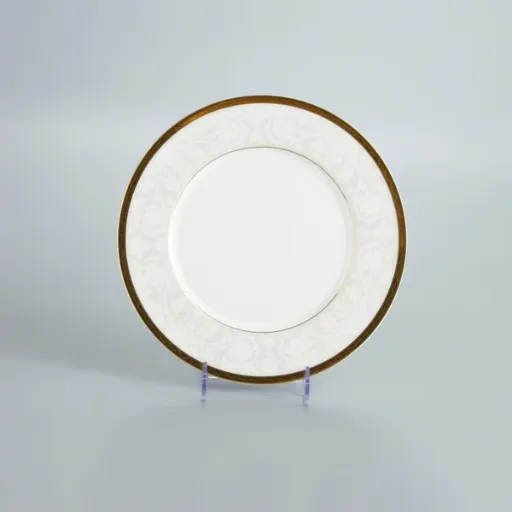
Particle size is the second major specification after chemistry. Bone ash for bone china is typically supplied as 325 mesh or 400 mesh powder. Each grade suits different product types.
325 Mesh Bone Ash
325 mesh bone ash has a particle size of approximately 44 micrometers. It is the standard grade for most bone china production.
Use 325 mesh when:
You produce standard tableware and hotelware with typical wall thickness
Your slip preparation system is optimized for this particle size
Cost control matters alongside quality
You need predictable, proven handling characteristics
400 Mesh Bone Ash
400 mesh bone ash is finer, with particles of approximately 37 micrometers. The finer particle size increases surface area and can improve packing density in the ceramic body.
Use 400 mesh when:
You produce ultra-thin or high-translucency ware
Surface finish is critical
You are willing to adjust slip water content and deflocculant levels
You are targeting premium decorative or artware markets
Michael Torres, a production manager at a Mexican bone china factory, ran a six-month comparison between 325 mesh and 400 mesh bone ash starting in 2024. His team found that 400 mesh improved translucency on cups with walls under 2.5 mm, but it also increased water demand by 5% during slip preparation. For thicker plates and serving dishes, 325 mesh delivered equivalent whiteness and strength at lower cost. They standardized on 325 mesh for the bulk of their line and reserved 400 mesh for premium thin-walled products.
Particle Size Distribution
Nominal mesh size does not tell the whole story. Two samples labeled 325 mesh can behave differently if one has a narrow particle-size distribution and the other contains coarse particles. Ask your supplier for particle-size distribution data or sieve analysis results. A well-controlled bone ash powder should have minimal oversize material and a tight distribution around the nominal value.
How Bone Ash Interacts with Other Body Ingredients
Bone ash does not work alone. Its value comes from how it interacts with kaolin, feldspar, and other body components during firing.
Bone Ash and Feldspar
Feldspar acts as a flux in bone china bodies. During firing, it forms a glassy phase that bonds the ceramic structure. Bone ash dissolves partially into this glassy phase, increasing translucency and modifying the thermal expansion of the body. If the bone ash is inconsistent, the glassy phase forms at a different temperature or viscosity, leading to warping or glaze-fit problems.
Bone Ash and Kaolin
Kaolin provides plasticity in the unfired body and aluminum silicate in the fired body. Bone ash reduces the need for high kaolin content, which is why bone china can be thinner and more translucent than hard-paste porcelain. However, the ratio must be balanced. Too much bone ash relative to kaolin can weaken the body or make forming difficult.
Bone Ash and Water in Slip Preparation
Finer bone ash has a larger surface area per unit weight. This increases water demand during slip preparation. Manufacturers switching to 400 mesh from 325 mesh should test slip viscosity and adjust deflocculant levels. Technical ceramics references such as Digitalfire provide detailed guidance on slip rheology and body formulation.
Common Bone China Defects Linked to Bone Ash Quality
Many defects in bone china production can be traced back to bone ash quality. Recognizing the connection helps buyers specify the right material and reject substandard batches.
Defect 1: Gray or Brown Discoloration
Iron content above 0.05% is the most common cause of discoloration. In thin, translucent ware, even small amounts of iron create visible warm tones or dark speckles.
Prevention: Specify iron ≤0.05% and verify every COA. Test samples in your actual body recipe before approving bulk supply.
Defect 2: Pinholing and Blisters
High burning loss indicates residual organic material. During firing, this organic matter burns out, leaving pinholes or blisters in the fired surface.
Prevention: Use bone ash with burning loss ≤1.0% and confirm calcination temperature of at least 1200°C, preferably 1300°C.
Defect 3: Warping and Dimensional Instability
Variations in calcium and phosphorus content shift the maturation temperature of the body. If the body over-fires or under-fires relative to the kiln schedule, ware warps or shrinks unpredictably.
Prevention: Work with a supplier who provides consistent batch-to-batch chemistry. Review five to ten consecutive COAs before committing.
Defect 4: Poor Translucency
Using the wrong mesh size or a bone ash with poor particle-size distribution can limit translucency. Coarse particles scatter light rather than allowing it to pass through.
Prevention: Match mesh size to product wall thickness. Use 400 mesh for ultra-thin ware and 325 mesh for standard production.
Struggling with bone china defects? Contact our technical team to review your bone ash specifications and see how Feilong's controlled process can help.
How Feilong Produces Bone Ash for Bone China
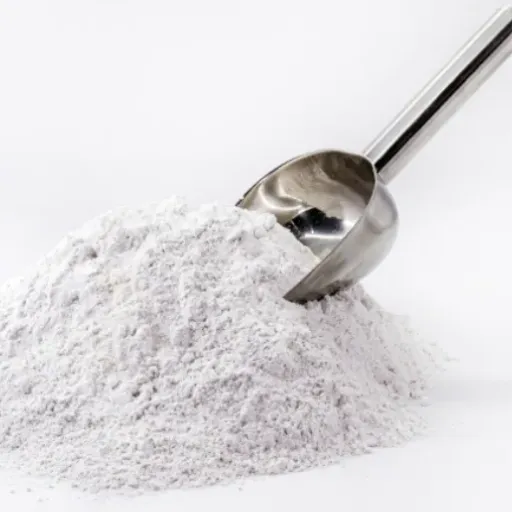
Understanding the production process helps buyers evaluate whether a supplier can deliver bone china-grade material consistently. Feilong manufactures bone ash through a vertically integrated process at our facility in Luohe, Henan Province.
Step 1: Defatted Bovine Bone Selection
Production begins with defatted bovine bone blocks. Defatting is critical because residual fat discolors the final product and interferes with calcination. Incoming material is inspected for fat content, odor, and foreign matter.
Step 2: High-Temperature Calcination
The prepared bone is calcined in controlled furnaces at approximately 1300°C. At this temperature, organic compounds decompose completely, leaving the white crystalline mineral structure that bone china requires. Temperature is monitored continuously to prevent under-calcination or over-firing.
Step 3: Precision Grinding and Sizing
After calcination, the material is cooled and ground to the specified mesh size. Separate grinding lines prevent cross-contamination between 325 mesh and 400 mesh grades. Sieving ensures the particle-size distribution meets internal standards.
Step 4: Quality Control and Documentation
Every batch is tested for calcium, phosphorus, iron, burning loss, pH, and color. A Certificate of Analysis documents the results. You can learn more about our bone ash production process and how it supports consistent bone china production.
Sourcing Bone Ash for Bone China Production
When evaluating a bone china raw material supplier, the right questions separate manufacturers from traders. Use this checklist during qualification.
1. Do You Control Your Own Production?
Vertically integrated manufacturers control raw material sourcing, calcination temperature, grinding, and testing. This control is essential for batch-to-batch consistency.
2. Can You Provide COAs for Multiple Consecutive Batches?
A single COA can be misleading. Reviewing multiple batches shows whether the supplier truly holds specifications within tight ranges.
3. What Calcination Temperature Do You Use?
Bone china-grade bone ash should be calcined at 1200-1300°C. Lower temperatures may leave organic residues that cause defects.
4. What Mesh Sizes Are Available?
Confirm availability of 325 mesh and 400 mesh grades. Ask whether the supplier can provide particle-size distribution data.
5. What Is Your Sample and Bulk Order Policy?
Request sample quantities starting from 1 kg for qualification testing. Standard bulk MOQs are typically 1 metric ton.
6. Do You Have Export Experience?
Suppliers with established export experience understand international documentation, packaging standards, and customs requirements for animal-derived materials.
Sophie Dubois, a buyer for a French ceramics distributor, learned the value of these questions in 2022. A low-priced supplier promised bone china-grade material but could not provide consistent COAs or export-compliant packaging. After two shipments with variable iron content, she switched to a manufacturer with documented process control and direct export experience. Her defect complaints dropped to nearly zero.
Conclusion
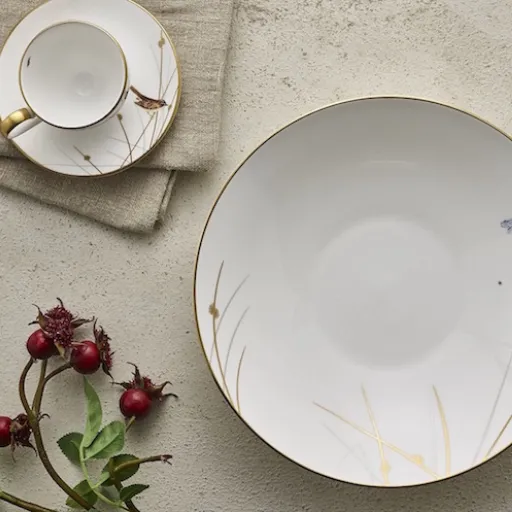
Bone ash for bone china is not a generic raw material. The chemical composition, particle size, and supplier process control directly determine whether your bone china achieves the translucency, strength, and whiteness that define the product.
Key takeaways:
Specify bone ash with Ca ≥35.0%, P ≥16.0%, Fe ≤0.05%, and burning loss ≤1.0%
Choose 325 mesh for standard bone china and 400 mesh for ultra-thin, high-translucency ware
Verify consistent Ca/P ratios across multiple batch COAs
Match bone ash quality to your body recipe and firing schedule
Partner with a vertically integrated manufacturer that controls calcination and testing
At Luohe Feilong Bone Carbon Co., Ltd., we have supplied bone ash for ceramics and bone china manufacturers for over 20 years. Our 1300°C calcination process, 325 mesh and 400 mesh grades, and batch-to-batch quality control give manufacturers the raw material confidence they need.
Ready to source bone ash for your bone china line? Request a free sample with full COA or get a bulk FOB quote for your next production run.
Recently Posted
-
Luohe Feilong Bone Carbon: Industrial Bone Ash Manufacturer Since 2011
August 17, 2026When a copper foundry in Turkey needs bone ash that releases cleanly from a sand mold at 1,100 degrees Celsius, or a bone china fa Read More
 -
Bone Ash in Copper Casting Mold Release: Application and Practical Guidance
August 14, 2026A copper sand casting foundry in India was producing electrical switch components that required a clean, smooth surface finish for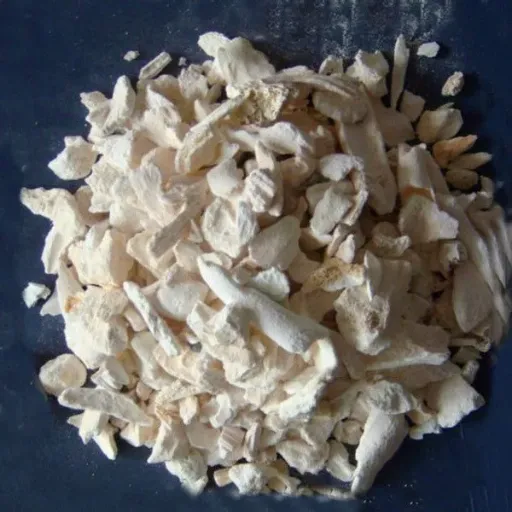 Read More
 -
How to Source Bone Ash for Foundry Applications: A Buyer's Checklist
August 13, 2026A purchasing manager at a brass foundry in Egypt ordered 20 metric tons of bone ash from a new supplier at a price roughly 25% bel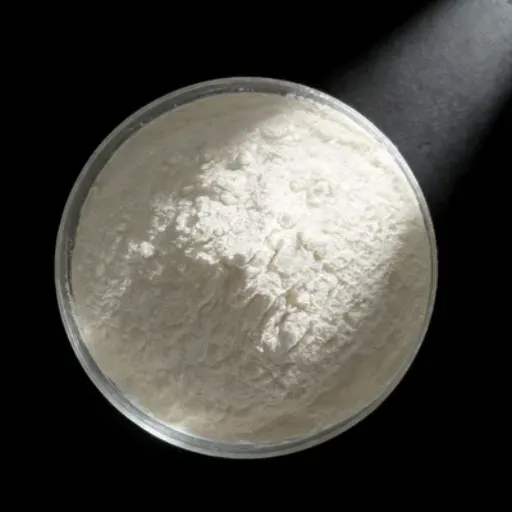 Read More
 -
Bone Ash vs Graphite Powder for Non-Ferrous Metal Mold Release
August 12, 2026A brass foundry in Southeast Asia switched from bone ash to a lower-cost graphite powder for its sand casting release agent, expec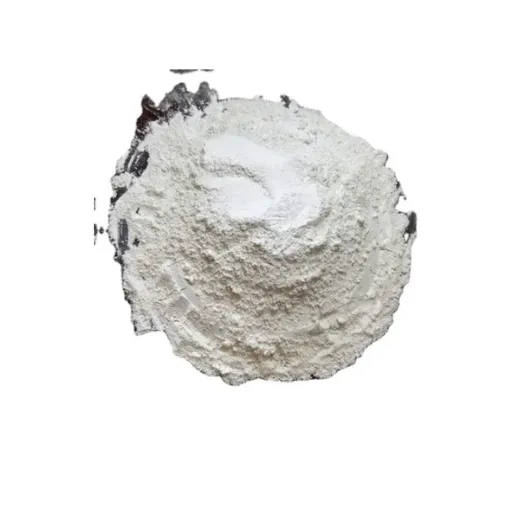 Read More

Contact Us
Recommended Products
-
 Manufacturer Sell Low Price Calcined Bone Ash or PowderUS$ 850MOQ: 5 Tons
 -
Manufacturer Sell Low Price Calcined Bone Ash or PowderUS$ 850MOQ: 5 Tons
-
Manufacturer Sell Low Price Calcined Bone Ash or PowderUS$ 850MOQ: 5 Tons
-
Sell Well Bone Ash for Mold Releasing UseUS$ 880 - 920MOQ: 5 Tons
-
Feilong Direct Sales Die-casting Water-soluble Mold Metal Release AgentUS$ 920MOQ: 5 Tons
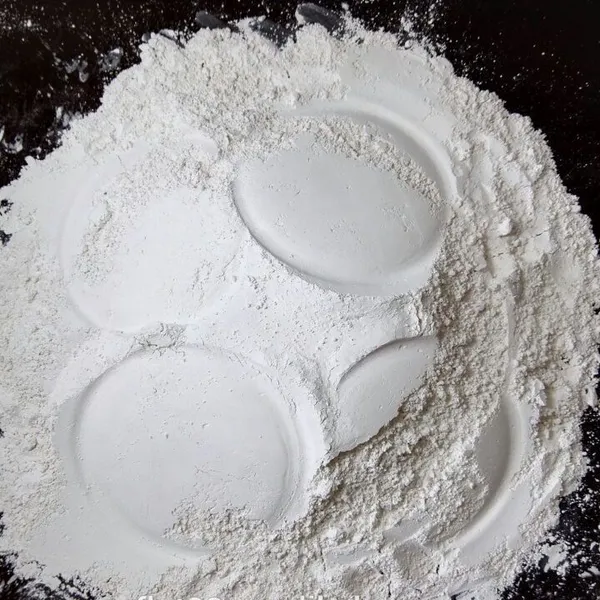
-
Natural Animal Bone AshUS$ 880 - 920MOQ: 5 Tons
-
China Manufacturer Supply Eco-Friendly Bone Ash PowderUS$ 890MOQ: 1 Ton
-
Calcined Bone Ash for Bone China With GoodPriceUS$ 880 - 920MOQ: 5 Tons
-
Synthetic Bone Ash for Ceramic With Good PriceUS$ 850MOQ: 5 Tons
-
Calcium and Phosphorus Powder - 325 MeshPowderUS$ 850MOQ: 5 Tons
-
Calcium and Phosphorus Powder - 325 MeshPowderUS$ 850MOQ: 5 Tons
-
Calcium Stearate PVC PE Lubricant Mould-releasing Powder ManufacturerUS$ 850MOQ: 5 Tons
-
Reputed Supplier Selling Bone Ash Powder Which Meet With Environmental Standard As Animal FeedstuffUS$ 850MOQ: 5 Tons
-
Industrial Grade Bone Ash for Bone Ceramics and MetallurgyUS$ 900MOQ: 10 Tons
-
Animal Ashes Used for Bone ChinaUS$ 900MOQ: 5 Tons
-
Calcium and Phosphorus Powder - 325 MeshPowderUS$ 850MOQ: 5 Tons
-
High Quality Bone Ash for Mold Releasing Use/bone Ash PowderUS$ 850 - 880MOQ: 5 Tons
-
Manufacturer Sell Low Price Calcined Bone Ash or PowderUS$ 850MOQ: 5 Tons
-
Calcined Bone Ash for Bone China With GoodPriceUS$ 880MOQ: 5 Tons
-
High Quality Bone Ash for Mold Releasing Use/bone Ash PowderUS$ 880 - 920MOQ: 5 Tons